
Why Do Solenoid Valves Keep Causing Downtime?
Abstract
If you’ve ever watched a production line stall because a valve stuck, leaked, or burned out, you already know the real cost of “just a small component.” Solenoid Valves sit right at the intersection of electrical control and fluid motion, which means tiny spec mismatches become big operational headaches.
This article breaks down the most common pain points buyers face (mysterious failures, inconsistent flow, coil overheating, leakage, noisy actuation, and slow response),
then gives you a practical selection checklist, installation safeguards, a maintenance routine, and a troubleshooting table you can hand to a technician.
You’ll also find a supplier question list to help you avoid repeat failures before you place the order.
Table of Contents
- Customer Pain Points You Can Prevent
- How Solenoid Valves Work in Plain Language
- Selection Checklist That Stops Spec Mistakes
- Direct-Acting vs Pilot-Operated vs Semi-Direct
- Installation Details That Prevent Most Failures
- Maintenance Plan for Reliable Operation
- Troubleshooting Table for Fast Diagnosis
- What to Ask a Supplier Before You Buy
- How Ningbo Qimao Trading Co., Ltd. Supports Valve Selection
- FAQ
- Conclusion
Outline
- Identify the top failure patterns that waste time and money.
- Translate “spec sheet language” into real-world decisions.
- Pick the right valve type for your pressure, media, and flow needs.
- Install it in a way that keeps it clean, cool, and stable electrically.
- Maintain it with a simple schedule (and know what “early warning” looks like).
- Use a troubleshooting table to shorten downtime.
- Vet suppliers with questions that reveal quality, consistency, and support.
Customer Pain Points You Can Prevent
Most solenoid-valve problems don’t start as “bad valves.” They start as unclear requirements, incomplete operating data, or installation details that quietly shorten service life. Here are the pain points that show up again and again in factories, equipment builds, and field service:
- Unplanned stops: a valve sticks or won’t shift, freezing a pneumatic cylinder or blocking a fluid line.
- Mysterious leakage: the system loses pressure, media seeps around the seat, or actuators creep when they should hold.
- Coil burnout: overheating from incorrect voltage, high ambient temperature, or continuous energizing beyond the coil’s duty design.
- Slow response: the valve “works,” but not fast enough—causing timing drift, inconsistent cycle times, or poor process control.
- Noise and vibration: chattering often signals unstable pressure, contamination, or electrical ripple.
- Compatibility issues: seals swell, crack, or harden because the elastomer doesn’t match the fluid or temperature.
- Confusing specs: buyers compare flow numbers that aren’t measured the same way, then wonder why the real system underperforms.
Practical takeaway: The fastest path to reliability is to treat Solenoid Valves like a system decision, not a part-number decision. Your “right valve” depends on media, pressure behavior, temperature, contamination level, required response time, and the electrical environment.
How Solenoid Valves Work in Plain Language
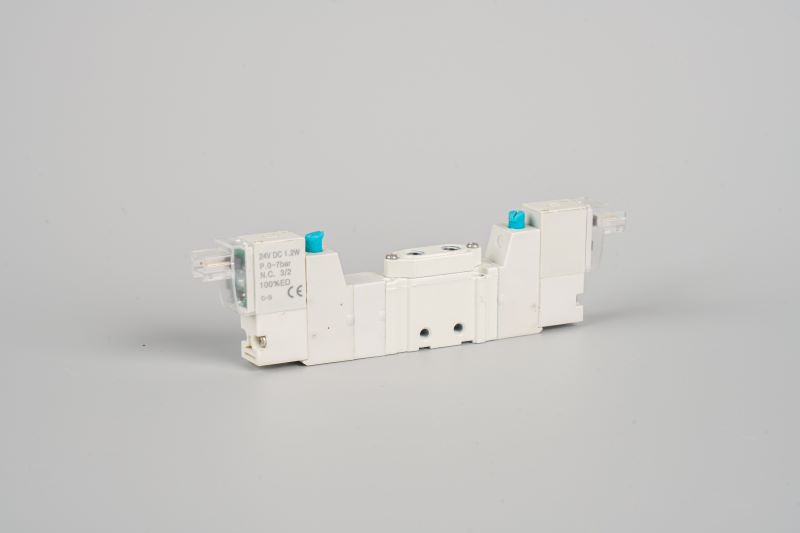
A solenoid is an electromagnetic coil. When energized, it creates a magnetic field that pulls a movable metal piece (often called a plunger, core, or armature). That movement opens or closes a passage, shifts a spool, or pilots pressure to move a larger internal element.
- Electrical input (DC or AC voltage) becomes mechanical motion.
- Mechanical motion changes a flow path (open/close, divert, exhaust, or regulate).
- The valve’s internal design determines whether it can move the sealing element directly or needs pressure to help.
That last point is the hidden trap: in some designs, the solenoid doesn’t “muscle open” the main orifice by itself. Instead, it controls a smaller pilot path, and system pressure does most of the work. This is why minimum pressure requirements matter.
Selection Checklist That Stops Spec Mistakes
Before you compare catalogs, lock down these inputs. If you can’t answer a row confidently, you’re not ready to choose a valve—and that’s exactly when downtime gets baked in.
| Decision | What You Must Define | Why It Matters | Quick Tip |
|---|---|---|---|
| Media | Air, water, oil, gas, steam, refrigerant, or mixed media | Determines seal material, body material, and internal design | If media can carry particles, plan filtration and a contamination strategy. |
| Function | On/off, directional control, exhaust, or divert | Sets the valve family (2-way, 3-way, directional spool, etc.) | Map the flow path on paper before selecting ports and states. |
| Normal State | Normally closed (NC) or normally open (NO) | Determines fail-safe behavior during power loss | Choose based on safety: “What should happen if power drops?” |
| Pressure Range | Minimum, normal, and peak pressure (plus pressure stability) | Critical for pilot-operated designs and sealing performance | Include transient spikes, not just steady-state pressure. |
| Temperature | Media temperature and ambient temperature | Affects coil heat, seal life, viscosity, and response time | High ambient + continuous duty can overheat coils even at correct voltage. |
| Flow Need | Required flow or cycle time constraints | Under-sizing causes slow actuation and pressure drop | Start from system performance targets, then back-calculate valve capacity. |
| Valve Type | Direct-acting, pilot-operated, or semi-direct | Defines minimum pressure needs, power, and orifice capability | If you have low/variable pressure, direct or semi-direct is often safer. |
| Materials | Body material and seal (elastomer) compatibility | Prevents corrosion, swelling, cracking, and leakage | If unsure, request compatibility guidance with your exact media. |
| Electrical | Voltage, AC/DC, connector type, and control method | Wrong voltage or unstable supply leads to chatter and burnout | Confirm coil tolerance and consider surge suppression for inductive loads. |
| Environment | Dust, moisture, washdown, vibration, outdoor exposure | Drives protection needs and mechanical retention | Plan for worst-case conditions, not the clean lab scenario. |
Direct-Acting vs Pilot-Operated vs Semi-Direct
This is where many “it worked on the bench” failures begin. The valve may click in the shop, then refuse to operate in the field because the pressure conditions are different.
- Direct-acting: the solenoid force moves the sealing element directly. Best when pressure is low, variable, or sometimes near zero.
- Pilot-operated: the solenoid controls a pilot path, and line pressure helps move the main element. Great for larger flows, but often needs a minimum pressure to operate reliably.
- Semi-direct (assisted lift): a hybrid approach that can handle a wider pressure range than purely pilot designs while still supporting good flow capacity.
Rule of thumb: If your system pressure can dip (startup, low-demand mode, tank drawdown, unstable compressors), avoid choosing a valve that silently depends on minimum pressure unless you can guarantee it.
Installation Details That Prevent Most Failures
Even high-quality Solenoid Valves will fail early if installation ignores contamination, heat, or electrical protection. These steps are not “nice to have”—they’re reliability controls:
- Filter the media: fine particles scratch seats and spools, causing leaks and sticking.
- Respect flow direction: many valves require correct inlet/outlet orientation for sealing and pilot behavior.
- Control water hammer and pressure spikes: sudden pressure shocks can damage seals and internal elements.
- Keep coils cool: avoid placing coils near heat sources; allow airflow; plan for ambient peaks.
- Use proper wiring and connectors: loose connections create voltage drop, heat, and chatter.
- Add surge suppression: protect control electronics from inductive kick, especially on DC coils.
- Check mounting stress: misalignment can twist the body and cause internal friction or leakage.
Maintenance Plan for Reliable Operation
A simple routine beats emergency replacements. Here’s a maintenance plan that focuses on early indicators—the stuff you can spot before a line goes down.
| Frequency | What to Check | What “Good” Looks Like | Early Warning Signs |
|---|---|---|---|
| Weekly | Listen for chatter / abnormal clicking | Consistent actuation sound | Chatter, buzzing, delayed click |
| Monthly | Inspect for leaks and residue | Dry body, stable pressure holding | Moisture, oil film, pressure creep |
| Quarterly | Verify coil temperature and electrical stability | Warm but not overheating; stable voltage | Excess heat, discoloration, intermittent faults |
| Semi-annual | Check filtration and contamination sources | Filters not overloaded; clean media | Frequent clogging, debris in exhaust, sticking events |
| Annual | Review operating data and failure history | Stable performance trends | Repeat failures in the same station or valve type |
Troubleshooting Table for Fast Diagnosis
When a valve fails, speed matters. Use this table to narrow the cause without guesswork.
| Symptom | Likely Cause | Quick Check | Practical Fix |
|---|---|---|---|
| Valve doesn’t actuate | No power, wrong voltage, coil failure | Measure voltage at the connector under load | Correct supply, tighten connections, replace coil if open/short |
| Valve actuates on bench, not in system | Minimum pressure not met (pilot-type), backpressure issues | Confirm pressure at inlet during operation | Switch to direct/semi-direct or stabilize pressure conditions |
| Chattering or buzzing | Voltage drop, unstable pressure, contamination | Check supply ripple and pressure fluctuation | Improve power quality, add regulation, filter media |
| Internal leakage / pressure won’t hold | Seat damage, seal incompatibility, debris | Isolate valve and leak-test | Clean/replace internals; confirm seal material matches media |
| Coil gets excessively hot | Overvoltage, continuous energizing, high ambient | Confirm rated voltage; measure duty cycle | Correct voltage, improve ventilation, choose coil suited to duty/heat |
| Slow response | Undersized valve, viscosity/temperature effects, restrictions | Check pressure drop and upstream restrictions | Increase capacity, reduce restrictions, validate temperature limits |
What to Ask a Supplier Before You Buy
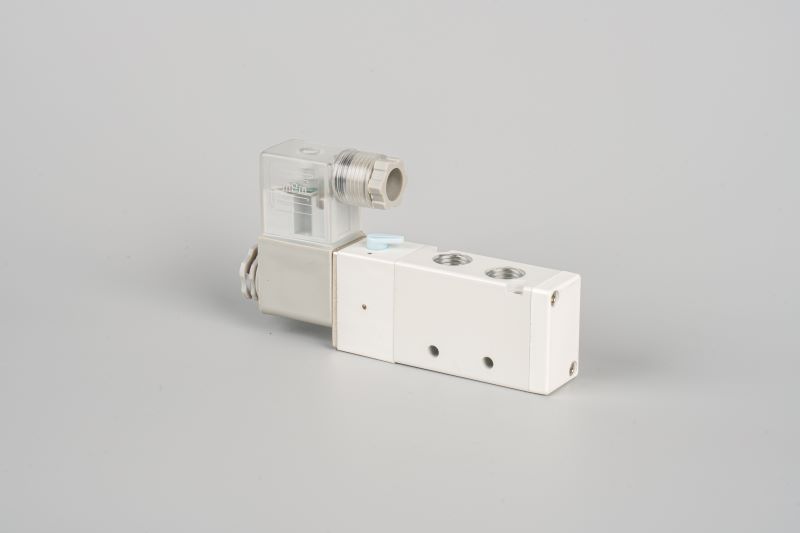
Solenoid Valves look similar in photos. The difference shows up in consistency, materials, coil performance, and how the supplier supports your application. Ask these questions before you commit:
- Operating window: What pressure and temperature range is proven for my media, not just listed?
- Coil details: What voltage options exist, and what protection is recommended for my control setup?
- Seal options: Which elastomers are available, and what is the compatibility guidance for my fluid?
- Flow definition: How is flow capacity stated, and what assumptions are behind it?
- Quality consistency: What checks are performed to avoid “one batch good, one batch bad” surprises?
- Spare parts: Can I source coils, seals, and service parts quickly for planned maintenance?
- Customization: Can ports, connectors, voltage, or mounting be adapted to fit my equipment layout?
How Ningbo Qimao Trading Co., Ltd. Supports Valve Selection
If your team needs to cover multiple operating conditions—such as high flow demand, medium pressure systems, or applications where pressure varies—having a supplier with a broad solenoid valve portfolio makes selection easier and reduces risk. Ningbo Qimao Trading Co., Ltd. offers Solenoid Valves across multiple categories, which helps equipment builders and maintenance teams match valve design to real operating behavior instead of forcing one model into every job.
- High-flow and large-orifice needs: useful when throughput is the priority and pressure drop must be controlled.
- Medium-pressure applications: a practical fit for systems that require stable sealing and repeatability under typical industrial pressure ranges.
- Semi-direct designs: helpful when you want wider pressure adaptability than purely pilot-operated designs.
- Directional control and fluid control options: helpful when your system spans pneumatic actuation and fluid switching in one build.
The real value is not just “more models,” but a clearer path to the right match: you define the operating window and behavior you need, then narrow down the valve family that naturally fits that window.
FAQ
Q: How do I decide between normally closed and normally open?
A: Start with the power-loss scenario. If stopping flow is safer, choose normally closed. If maintaining flow is safer (for cooling or purge), choose normally open.
Q: Why does my valve click but not allow flow?
A: The solenoid may be moving, but the main sealing element may not be lifting—often due to insufficient differential pressure, contamination, or a blocked pilot path.
Q: Do Solenoid Valves need a filter even for “clean” systems?
A: Yes. “Clean” is relative. Compressor wear, pipe debris, seal fragments, or scale can accumulate over time. Filtration is cheap insurance against sticking and leakage.
Q: What causes coil overheating when the voltage is correct?
A: Continuous energizing at high ambient temperature, poor ventilation, heat soaking from nearby equipment, or unstable power that increases current draw can all raise coil temperature.
Q: How can I reduce noise and chatter?
A: Stabilize pressure, confirm correct voltage at the coil under load, tighten connections, improve filtration, and consider suppression components where appropriate.
Q: What should I send a supplier to get the right recommendation fast?
A: Media, pressure range (min/normal/peak), temperature (media + ambient), required function (NC/NO, ports, direction), flow/cycle targets, and the electrical supply details (AC/DC, voltage, connector).
Conclusion
Solenoid Valves don’t have to be a downtime lottery. When you define your operating window clearly, choose the right valve type (not just a part number), install with contamination control and electrical stability in mind, and follow a lightweight maintenance routine, reliability becomes predictable. If you’re selecting valves for a new build—or troubleshooting recurring failures—use the tables and checklists above as a practical spec-and-install playbook.
Want help matching the right Solenoid Valves to your pressure, media, and response-time targets—without the trial-and-error failures? Tell us your application details and contact us to get a fast, practical recommendation from Ningbo Qimao Trading Co., Ltd.
Previous:No News
Send Inquiry




X
We use cookies to offer you a better browsing experience, analyze site traffic and personalize content. By using this site, you agree to our use of cookies.
Privacy Policy